What Is My Role in My Child's Maths Tutoring?
What Is My Role in My Child's Maths Tutoring?
 Lee Mathematics Tuition
- Mar 28
- 6 min read

Defining Your Role in the Tutoring Process
Many students struggle with mathematics despite receiving professional tutoring. The frustrated sighs over algebra homework and the confusion about geometric concepts are familiar scenes in many households. What often goes unrecognised is that the missing element in mathematics success might not be more tutoring hours or a different teaching approach—it's clear understanding of the parent's role in the learning process.
Most parents want to help with mathematics homework but aren't sure exactly what their role should be. Common questions include: Should I be reviewing concepts? How much help is too much? Am I causing confusion if I provide other methods? How can I support without creating dependency?
This guide answers these questions by clarifying exactly what role parents should play in the mathematics tutoring process. You'll discover how to complement professional tutoring effectively, creating a partnership that amplifies learning outcomes without confusion or overstepping.
Understanding the Three Roles: Parent, Tutor, and Student
The first step to effective involvement is understanding that mathematics education works best when parents, tutors, and students each have clearly defined roles that complement one another:
The Tutor's Role: To provide expert instruction on mathematical concepts, introduce problem-solving strategies, assess understanding, and customise teaching approaches to the student's learning style.
The Student's Role: To actively engage with the material, practice consistently, communicate areas of confusion, and gradually develop independent learning skills.
The Parent's Role: To create an optimal learning environment, reinforce concepts consistently, communicate with the tutor about progress, and provide emotional support during challenges.
When these roles are clearly understood and respected, they create a powerful learning system where each participant contributes appropriately without creating confusion or overlap. As a parent, understanding exactly where your responsibilities begin and end makes your support much more effective.
What are the qualifications should I look for in a tutor?
5 Key Responsibilities in Your Parental Role
1. Creating the Optimal Home Learning Environment
One of your most fundamental responsibilities is establishing an effective learning environment. This physical setup significantly impacts learning outcomes and doesn't require elaborate arrangements:
Dedicate a consistent, well-lit study space free from distractions
Establish a regular schedule for mathematics practice aligned with tutoring sessions
Remove digital distractions during focused learning time
Ensure necessary resources (calculators, graph paper, etc.) are readily available
Create a positive atmosphere around mathematics learning
Remember that the environment you create communicates your values about learning. A dedicated space signals that mathematics practice is important and deserves focused attention, helping your child mentally prepare for learning.
2. Communicating Effectively With the Mathematics Tutor
Your role includes being the communication bridge between tutoring sessions and home practice. This responsibility involves:
Sharing insights about your child's learning preferences and challenges
Asking specific questions about current learning objectives
Understanding the teaching methodology being used
Providing feedback about what practice approaches work at home
Discussing upcoming academic requirements or assessments
Effective parent-tutor communication creates alignment that prevents confusion and accelerates learning. Brief conversations at the end of tutoring sessions provide valuable opportunities to understand current focus areas and how best to support them at home.
3. Supporting Without Taking Over
Finding the right balance between support and independence is a critical part of your role. Your responsibility is to:
Ask guiding questions rather than providing answers
Encourage problem-solving approaches rather than memorisation
Celebrate effort and progress, not just correct answers
Help identify when additional tutor support is needed
Model a positive attitude toward mathematical challenges
Keep in mind that your goal should be to gradually work yourself out of a job by building independence, not to become a second mathematics teacher. This means providing just enough support to keep your child moving forward while ensuring they're doing the actual learning work themselves.
Is my child showing signs of maths anxiety?
4. Implementing Effective Practice Routines
Your role includes establishing consistent mathematics practice between tutoring sessions. This responsibility involves:
Scheduling short, frequent practice sessions rather than infrequent long sessions
Creating visual tracking systems to monitor progress
Connecting mathematics to everyday situations and applications
Using recommended resources that align with tutoring objectives
Implementing review techniques that strengthen retention
It's important to understand that quality and consistency matter more than quantity. Even 15 minutes of focused, well-guided practice several times a week creates powerful learning momentum and helps cement concepts between tutoring sessions.
5. Modelling Positive Mathematics Attitude
One crucial aspect of your role that's often overlooked is how your own attitude toward mathematics affect your child. Your responsibility includes:
Using positive language about mathematics and its value
Sharing real-world applications of mathematical thinking
Demonstrating perseverance with challenging problems
Avoiding negative statements about mathematics ability
Emphasising growth and improvement rather than innate talent
Be aware that your attitudes toward mathematics powerfully transfer to your child, even when unspoken. Simply changing how you talk about mathematics at home can dramatically shift your child's relationship with the subject and their willingness to engage with challenging concepts.
Your Essential Role: Creating Continuity in Learning
One of your most important roles as a parent is maintaining continuity between tutoring sessions. Mathematics is learned through consistent reinforcement, not isolated lessons. When concepts are practised consistently throughout the week, rather than just during tutoring sessions, retention and understanding significantly improve.
This doesn't mean teaching new material—that's the tutor's role. Instead, your responsibility is to:
Understand the current focus of tutoring sessions
Reinforce those specific concepts during the week
Use consistent terminology and methods that align with the tutor's approach
Monitor practice without taking over the learning process
Ensure administrative continuity by managing the practical aspects of tutoring
This last point is often overlooked, but critically important. Maintaining learning momentum requires ensuring that tutoring sessions continue without unnecessary interruptions. This means managing the financial aspects of tutoring by ensuring it fits within your budget and that payments are made promptly. Late payments can sometimes lead to scheduling issues or session cancellations, which disrupt the learning sequence and can negatively impact your child's progress.
Parents who understand their specific role in mathematics learning create a powerful bridge between tutoring sessions. This continuity accelerates learning by turning isolated lessons into a connected learning journey with multiple reinforcement points throughout the week.
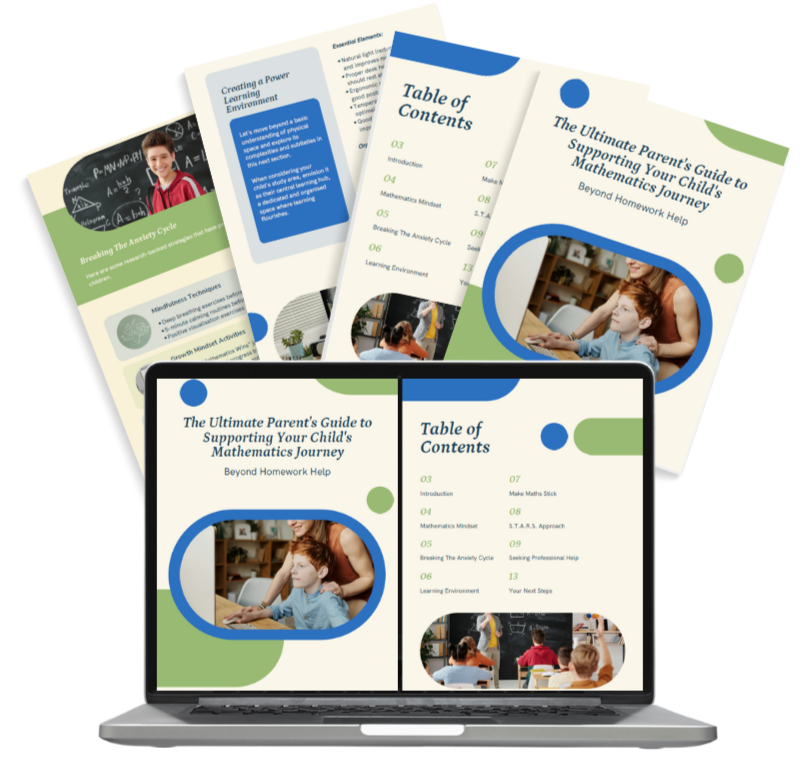
Get our FREE Maths Success Blueprint
When to Step Back: Understanding Role Boundaries
Knowing when to step back is as important as knowing when to help. Your role does NOT include:
Teaching new concepts ahead of the tutor
Introducing alternative methods that might create confusion
Completing homework or assignments for your child
Pressuring for perfect performance
Comparing progress with siblings or other students
When considering your involvement, focus on reinforcing what's already been taught rather than introducing new material. This approach respects the expertise of the professional tutor while providing the consistent reinforcement that turns tutoring sessions into lasting mathematical understanding.
By staying within appropriate role boundaries, you create space for your child to develop their own mathematical identity and learning approach. This balance helps avoid the common pitfalls of either over-involvement (which can create dependency) or under-involvement (which misses opportunities for reinforcement).
How Lee Mathematics Tuition Works with Parents
At Lee Mathematics Tuition, we've developed a collaborative approach that maximises the benefits of the parent-tutor partnership. Our methodology recognises parents as essential partners in the learning process while providing clear guidance on how to support effectively.
Our Parent Partnership Framework
Our approach includes several key elements designed to help parents fulfil their role effectively:
Initial Parent Consultation: Before tutoring begins, we meet with parents to understand your child's specific needs, learning style, and your family's goals. This conversation helps establish clear expectations about respective roles from the start.
Regular Progress Updates: After each session, our tutors provide brief, actionable feedback about what was covered and specific ways parents can reinforce concepts at home. These aren't just progress reports—they're practical action plans.
Structured Home Practice Resources: We provide carefully selected practice materials that align perfectly with tutoring content, eliminating guesswork about what type of home practice will be most beneficial.
Open Communication Channels: We maintain multiple ways for parents to connect with us, ensuring questions can be addressed promptly without waiting for the next session.
This structured approach helps parents understand exactly what their role entails at each stage of the tutoring relationship. By providing clear guidance and resources, we enable parents to support their child's mathematics learning efficiently and effectively, without overstepping or creating confusion.
Our experience shows that when parents understand their specific role and are equipped with the right tools to fulfil it, students progress significantly faster and develop greater mathematical confidence. The parent-tutor partnership becomes a powerful force for mathematics success when built on clear communication and well-defined responsibilities.
What factors should I consider in getting the right tutor?
Parents' Role in Building Mathematical Confidence
Your most important role in the mathematics tutoring process isn't teaching—it's creating the conditions for confidence to develop. When you understand the specific ways you should support tutoring, you help your child develop not just mathematical skills but a positive relationship with learning itself.
The most effective parental involvement comes from clarity about your specific responsibilities:
Creating a supportive learning environment
Maintaining communication with the tutor
Reinforcing concepts consistently
Balancing support with independence
Modelling positive attitude
By focusing on these specific aspects of your role, you create a powerful partnership with your child's mathematics tutor that amplifies learning outcomes while developing independence. This clarity helps avoid common pitfalls like creating dependency, introducing confusion, or undermining the tutor's approach.
Remember that your role is to bridge formal tutoring sessions with home practice, creating the consistency that transforms isolated lessons into connected mathematical understanding. When parents understand exactly what their role entails—and what it doesn't—the mathematics tutoring process becomes significantly more effective.
Book a FREE ASSESSMENT todayFAQs